

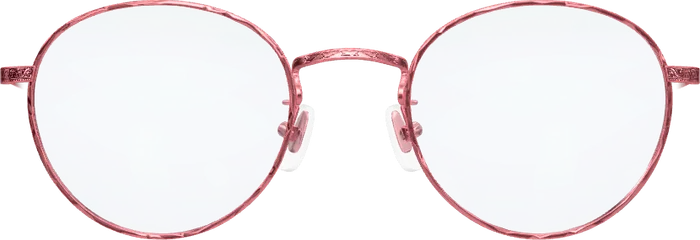
 Elsa
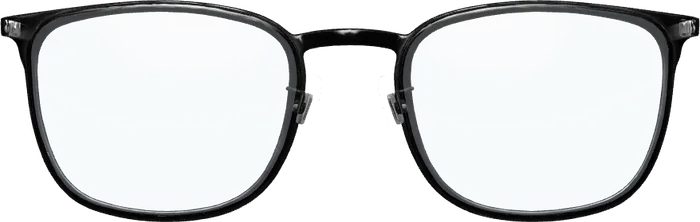 Emil
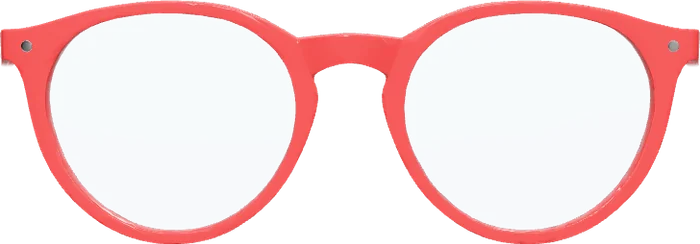 Ines
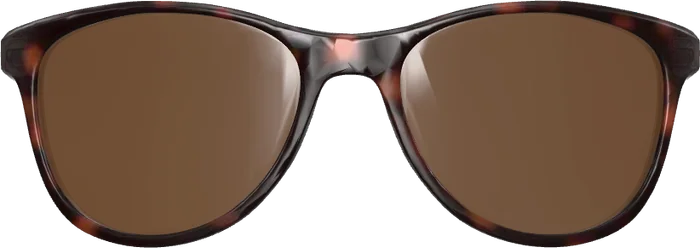 Paul
In short
- You need a millimetre ruler and a mirror.
- Measure three times and take the average.
- For progressive lenses and strong prescriptions, let an optician measure.
Measure your PD with a ruler and a mirror
Stand close
Stand about 20 cm (8 in) from a mirror and hold the ruler level against your brow.
Set the zero
Close your right eye. Line the zero up with the centre of your left pupil.
Read the number
Open your right eye and close the left without moving your head. Read the mark over the centre of your right pupil.
Repeat it three times. If the readings differ by more than a millimetre, measure again, calmly.
More accurate: with a helper
Sit down and look at something at least three metres away, not at the person measuring. They hold the ruler against your brow and read from pupil centre to pupil centre. That gives you your distance PD.
Can you measure PD online?
There are apps and web tools that estimate PD from your camera, often using a card of known size held to your forehead as a scale. Their accuracy varies with lighting, the camera and how still you hold. Treat the result like a careful ruler measurement: fine for simple lenses, not for demanding ones.
The try-on on this page does not measure PD. It shows you how frames look on your face.
See it on your own face.
Free, no app and no sign-up. The camera picture never leaves your device.
What the number means
Adult PD usually lies between 54 and 74 mm. It is often written per eye, for example 31.5 / 32, measured from the middle of the nose; the two halves are rarely identical. A prescription from an eye doctor often leaves PD out. For near vision, as in reading glasses, PD is a few millimetres smaller than for distance.
When an optician should measure
For simple single-vision glasses with a mild prescription, a careful measurement of your own is usually enough. With progressive lenses, strong prescriptions and prism, every half millimetre counts. Then an optician measures with an instrument, and also the fitting height in the frame you chose.
Choosing that frame is the other half of the job: what glasses suit my face and the virtual glasses try-on help with it.